
The Insistence of Possibles
Towards a Speculative Pragmatism Isabelle Stengers Speculative thinking, as we seek to inherit it, is expressed for the first time, with the greatest accuracy, in Alfred North Whitehead’s exhortation “Philosophy […]
Towards a Speculative Pragmatism Isabelle Stengers Speculative thinking, as we seek to inherit it, is expressed for the first time, with the greatest accuracy, in Alfred North Whitehead’s exhortation “Philosophy […]

by Matt Bluemink To think the question of individuality is to take a step back through the history of philosophy. Throughout every philosophical epoch, thinkers have been concerned with the […]

The keynote lecture below was delivered by Dr. Martin Savransky at the STingG Symposium 2024 — an event held on June 19 at the University of Sheffield’s Arts Tower. The […]

The lecture below was recorded in July 2024 in London as part of Antikythera’s Cognitive Infrastructures Studio lecture series. Antikythera is a research and development institute focused on understanding the […]

Shane Smith sits down with Sam Harris, philosopher, neuroscientist, and bestselling author for a deep conversation about artificial intelligence, consciousness, and the fragile future of humanity. They begin with Sam’s […]
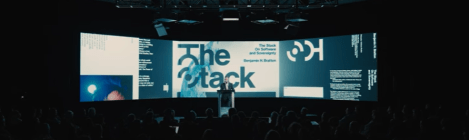
As computation becomes planetary infrastructure, how does its acceleration of hybrid intelligences pose new challenges to fundamental philosophical questions? As machine sensing, machine cognition, machine embodiment co-evolve, how does computation […]

By Yvette Granata [Edited version of paper presented at the Deleuze Studies Conference in Rome, July 2016.] 1.1 From ‘What is Philosophy’ to ‘Where is Non-Philosophy’? While Deleuze and Guattari’s What […]

By Dominic Piacentini | University of Maine The Anthropocene poses new challenges to those who engage in subsistence activities. In Appalachia, as vast acres of land are either seized for […]

Review of Ray Brassier’s Nihil Unbound: Enlightenment and Extinction, for Parallax 14:4 (2008), by Maya B. Kronic Perhaps familiarity has rendered ‘nihilism’ a toothless philosopheme, but philosophers themselves have lent a hand in its […]

by Tom Roberts ABSTRACT: Geographic theorisations of the ‘non-’ or ‘more-than-human’ continue to play a significant role in disrupting anthropocentrism within the humanities and social sciences. This article explores how […]

By Lukáš Likavčan | ŠUM #23 Read from a distant planet, the majuscule script [Majuskel-Schrift] of our earthly existence would perhaps seduce the reader to the conclusion that the earth […]

“Geokinetics has three aspects: the flow of matter, the fold of elements, and the circulation of planetary fields.”

An opening plenary by Nathan Gardels November 2024 1. The Condition of Planetarity The condition of planetarity is grounded in an awareness that we humans are not the center of […]

Introduction In 2020, I got hold of the slim Artscience (2021) by the Malaysian physicist turned writer and speculative designer Clarissa Lee. Subtitled A Curious Education, the unusual format brings together reflections on […]

by Ally Bisshop When Johann von Goethe wrote his 1790 treatise on the metamorphosis of plants,[1] he invited us to read in the form of a plant the signs of […]

An essay by philosopher Amy Ireland. Text source here. Originally published in the exhibition catalogue for Andre Škufca’s Black Market, International Centre of Graphic Arts (MGLC), Ljubljana, 2020. “You’re absolutely right. […]

This paper by Andrew Pickering is a revised version of a talk given at Oxford University, February 2, 2012, as part of a series of Linacre Lectures on “Environmental Governance […]
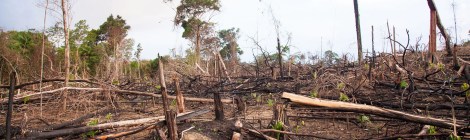
From the Committee for the Defense and Decolonization of Territories, August 29th, 2021. Published in Ill Will: Preface For four years, the Committee for the Defense and Decolonization of Territories […]

Below Jack Halberstam and Jane Bennett meet in a vibratory encounter designed not to explain or judge but to dilate, to influence, and to disorder. They speak of desire and […]

To be clear, I would never identify as an “anarcho-primitivist,” but there is much in the discourses and methods of those who do, and who have contributed greatly to ecological […]
 synthetic zerØ
You must be logged in to post a comment.