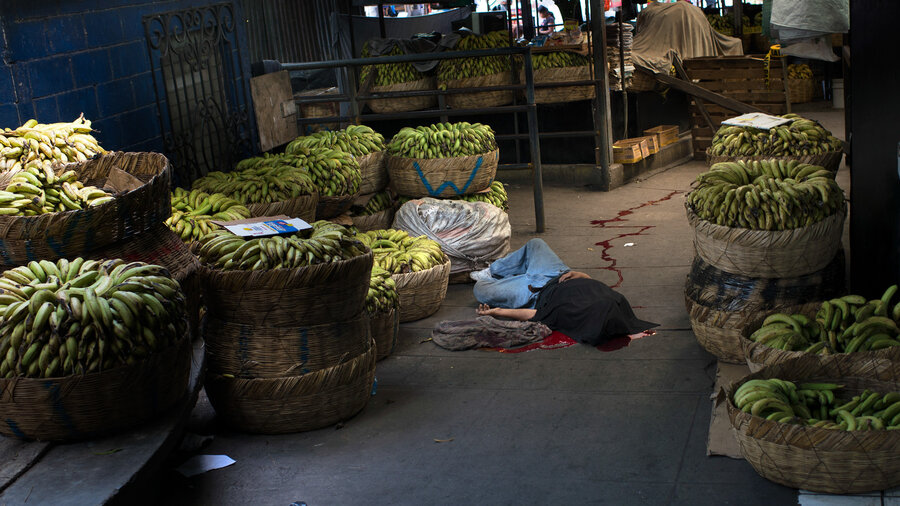
“You say these groups started off with a self-defense agenda. Why did they turn to criminal activity?
When these gang members arrived back to El Salvador, keep in mind the government had no reintegration policy. No psychological support. There’s been a lack of serious policy toward these gang member’s realities.
The absence of any type of government programs led to young people living in a state of abandon and a predatory logic started gaining ground: Killing became easy — and so did extorting. Gangs start taking on a criminal nature, above all dealing in extortion.
Do any of these gangs have a political ideology?
It’s hard to say. Not usually. What we usually see is that gangs defend whatever political party has their best interest in mind, or respects them. Or they side with whatever party does not repress them.
If neither group has a political ideology and they’re all from the same country, why are they fighting?
At the end of the day, they fight over what they represent, over their identity.
Amongst themselves, they have always been rivals. Those rivalries fed off the environment of post-war El Salvador. These were young people that live in marginal conditions, worse off than they were in the U.S. Perhaps in the U.S, they had some options. Here, in a post-war country with no resources, no infrastructure, no holistic focus on the problem, there’s just more marginalization and more repression.”
rest @ http://www.npr.org/sections/goatsandsoda/2015/10/05/445382231/how-el-salvador-fell-into-a-web-of-gang-violence
- Comment
- Reblog
-
Subscribe
Subscribed
Already have a WordPress.com account? Log in now.
 synthetic zerØ